Showing posts with label easter. Show all posts

08 April 2010

ALD Clergy Easter Outing

5 April 2010 – San Fabian. The clergy of the Archdiocese of Lingayen-Dagupan together with Archbishop Socrates B. Villegas, DD, had an Easter Outing today. The Easter Outing was a much needed break for the clergy after the hectic Holy Week celebration.

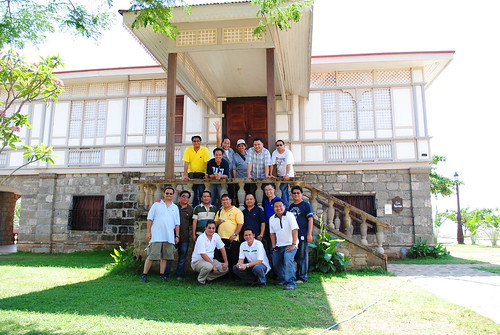
The clergy went to Bagac in Bataan province to see the “Las Casas Filipinas de Acuzar”, a heritage park featuring authentic 19th century Principalia Mansions and original Bahay na Bato (Stone Houses), which stand resplendent around a cobblestone plaza and streets paying tribute to the magnificent craftsmanship of our Filipinos.

Las Casas Filipinas de Acuzar is composed of 30 combined, centuries-old Principalia mansions (bahay na bato), ‘indio’ stilt houses, and a recreated two-story Escolta commercial establishment, including the original University of the Philippines Fine Arts building on which restoration work is ongoing.

It started out as a hobby for real estate developer architect Jerry Acuzar who acquired old structures from all over the Philippines and rebuilt these in the new site. Extra effort was made to restore each building to its original state and glory.

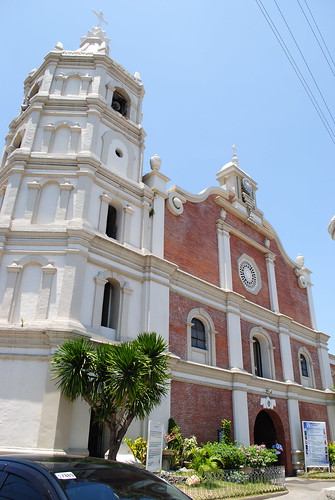
St. Joseph Cathedral, Balanga

The clergy passed by the Cathedral of St. Joseph in Balanga before proceeding to Bagac town. Archbishop Soc gave a guided tour of the cathedral to the clergy. He showed to the clergy the beautiful murals on the ceiling of the cathedral tracing the genealogy of Abraham to Joseph. The first bishop of Balanga, Msgr. Celso N. Guevara, was laid to rest below the belfry. The church was established on 18 April 1739.
To the “Bahay Pari”

The clergy then went to the “Bahay Pari” of the diocese. “The Bahay Pari” is also the residence of the bishop. Archbishop Soc, when he was the bishop of Balanga, stayed at the Bahay Pari. A “merienda” was prepared by the generous faithful of Balanga.

Father Soc pointing to the clergy the genealogy of St. Joseph from Abraham a depicted in the cathedral ceiling.

Mass at the “Las Casas Filipinas de Acuzar”

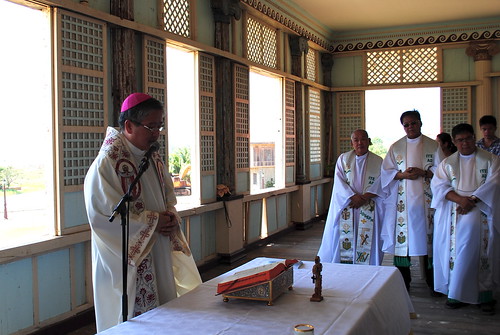
Upon arriving at the “Las Casas Filipinas de Acuzar”, the priests were met by Architect and Mrs. Jerry Acuzar and their children. They attended the mass celebrated by Archbishop Soc and the clergy at the reconstructed University of the Philippines Fine Arts building. Msgr. Villegas in his homily shared his reflection on the meaning of “bataan”.
To the Aquino Center in Tarlac

The priests spent sometime at the Aquino Center located at the Hacienda Luisita on their way to Pangasinan. They were graciously met and showed around the museum by Pinky and Ballsy, the two daughters of the late Senator Benigno Aquino, Jr. and former President Corazaon C. Aquino.

This museum houses the legacy of Sen. Ninoy Aquino and Pres. Cory Aquino. The museum houses various memorabilia related to the political careers of both Ninoy and Cory. This includes Ninoy’s mayoral stint in Concepcion Tarlac, his Senate position, his detention under Marcos’ martial law, his exile in the U.S., and his 1983 assassination at MIA. (Prominently displayed is Ninoy’s blood-stained clothes that he wore when he was gunned down.) On Cory’s side, the museum includes material from the 1986 snap elections and her whole presidency until 1992.

Both Pinky and Ballsy provided personal anecdotes and made the pictures and various memorabilia of their parents become alive with their personal stories.

Maria Elena (Ballsy) Aquino Cruz with the ALD clergy


Aurora Corazon (Pinky) Aquino Abellada with the clergy at the Aquino Center

To see more pictures of the “Easter Outing”, kindly click HERE.

All pictures are courtesy of Fr. Jim Cerezo

03 April 2010

Totoo Tayo na Paskua!

Message of His Excellency Most Reverend Socrates B. Viilegas, Archbishop of Lingayen Dagupan for the people of God to be read as homily during the Easter Sunday Masses in the Archdiocese of Lingayen Dagupan (Pangasinan Free Translation)

Panaon la na Paskua! It is Easter. Sisilibraan tayo so sangkabalgan a misterio na pananisia tayo – saray salita na panangaro diad sampot a panden na Huwebes Santo so nagmaliw a kimey na panangaro diad Calvario nen Biernes Santo, tan saya so angawit ed sikatayo diad inpanalo na panangaro diad Simba na Inkioli.

Say SALITAN inbalikas nen Huwebes Santo tan say PATEY ya agawad Biernes Santo , tan say INKIOLI ed kabuasan na Simba so sarayan saksakey ya bengatlan. Saya so tatawagen na Santo Papa tayon si Benedicto XVI ya “trinity of the paschal mystery” odino say “trinidad na misterio na Paskua”.

Say misterio na paskua so walad puso na Makristianon pananisia tayo. Say pananisia tan say panagbilay na sayan misterio na paskua so kabaliksan na say Simbaan. No anggapo so misterio na paskua, amin ya pikakasi tayo , getma tayo, tan amin ya bangat tayo so anggapoy kabaliksan tan kakanaan.

Onya so ibabangat na Simbaan tinaon-taon: “Say Paskua na inpanirap, inpangiponpon tan say inkioli nen Kristo so mangisasampot na intiron kalendaryo na liturgia na Simbaan.”

Balet say ambelat ya tepet: wala kasi so twa, makana tan mabilay ya koneksyon na say misyon tayo tan saray ministries tayo tan say misterio na paskua? Say misterio na paskua kasi so tuan sobol tan inspiration na amin a proyekto tan actibidades na Katolikon communidad diad Arkidiosis na Lingayen-Dagupan? Walad sikatayo kasi, odino say mas maong, kayaryan itayo la kasi na panagbilay na misterio na paskua?

Sasaragen ko ya anggad nayarian ko, siak a pastor yo, so ondedengel ed sikayo no bibisitaen ta kayo ed saray parokya yo, diad saray eskwelaan tan barangay yo. Dakerakel la so akabat kod sikayo diad saray nanduroman seminars, recollections tan social gatherings. Tan diad idedengel kod sikayo, ondedengel ak met ed Dios tan manpipikasi ak ed Dios ya tulongan to ak ya mangiwanwan ed sikayo.

Diad say pandarasal ko ed Dios tan say pitotoyaw kod sikayo, labay kon iparungtal ed sikayo pian namotektek yo so nayarin magmaliw a “statement of vision” ya sarag tayon tumboken diad Arkidiosis na Lingayen-Dagupan, laut lad ed sarayan panaon na paskua.

ICTHUS.

Say ICTHUS nen saman a panaon na saray Kristiano so sakey ya acrostic, odino saray unaan a letra na sakey ya sentence o poem so magmaliw a sakey a salita. Say ICTHUS so salitan nipaakar ed si Jesus a Kristo, Anak na Dios, ya Manangilaban. Tan say ICTHUS et say kabaliksan to ed language na Griego et SIRA. Para say Kristianos nen saman, no ibalikas da so salitan ICTHUS et ipapasen day dili da ed peligro. Say peligron ampan sikara so pateyan na Empirador. Say ICTHUS sirin so aliwa labat ya mangibabalikas ya si Jesus so Anak na Dios tan Manangilaban, say ICTHUS et mangibabawag na say katooran ya manbilay a twan disipulo nen Kristo, inpasak ed krus tan inmolid bilay.

Let us spell out the word ICTHUS.

I is for Integration of faith and life. Say pankakasakey na pananisia tan bilay. Makana ya ya ibilay tayo no anto so ibabawag tayo. The world does not listen to speakers anymore but to witnesses. Integrity of life is the opposite of split level Christianity. Integrity is wholeness. Integrity is the new name of holiness. The values of the Gospel must be allowed to transform society. We must evangelize politics, culture, economics and all aspects of human life. No anapen tayo so integridad na saray public officials tayo, siktayo komon so unaan ya manbilay a sakey a Totooy Simbaan unong ed say integridad.

C is for Catechesis, evangelization and mission. Nepeg ya sikatayo so magmaliw a missionero. Nepeg ya sikatayo so missionero diad kapegleyan tayo ni, tan komon, missionero diad arum a pasen, unong ed say linawa na Dios. The call of Christianity is to plunge into the deep and become fishers of men. The harvest is rich but the laborers are so few. We need to wake up a sleeping giant in the Archdiocese of Lingayen Dagupan—the laity. Kada Kristiano so nepeg ya magmaliw a katekista. Every Christian must evangelize. Every Christian is a missionary.

T is for Thanksgiving. Say letra T so wald pegley na ICTHUS. Saya sirin so centro, say sobol tan sankatageyan na say vision tayo – say Eukaristia. In envisioning to become a Eucharistic people, we do not only mean being “liturgy-centered”; we are called to live what the Eucharist celebrates which is to live and die for one another. The Church makes the Eucharist. The Eucharist makes the Church.

U is for Unity in diversity. Nanduroma so salita tan ethinc groups tayo --- Pangasinan, Ilocano tan Tagalog tan pati salitan Intsik et wala met lad sikatayo. Manlalapo tayod nanduroman kipapasen na bilay. Our Christian heritage is our source of communion. We all came from an ancestry of heroes like Urduja and Palaris. Our faith and our heritage of heroes in Pangasinan must make us one in spite of our linguistic or ethnic differences.

S is for Service, Justice and Charity. We shall promote social service and development. Itangoyor tayo so katunongan tan say kawayangan para saray walad kairapan, panbokbokor tan panaglames. At the sunset of life when we shall all be judged according to love, may God find us worthy to sit in His kingdom.

Inararok iran agagi ed si Kriston Inmolid bilay: sipaparaan kayo kasin magmaliw ya ICTHUS, a singa saramay Kristiano nen saman? Let us be ICTHUS! We want to be like Jesus! No onsabi lamet so Katawan, komon nanengneng to itayo tan naalmo toy dili to ya mansinag ed sikatayo. Happy Easter again. I bless you with Easter life and Easter joy!

Diad Katedral na San Juan Ibanghelista, Abril 4, 2010, say pinabli yo

+SOCRATES B. VILLEGAS

Archbishop of Lingayen Dagupan

Easter Sunday Readings in Pangasinan

Ononan Babasaen Gaw. 10:34, 37-43

Babasaen ya inaon ed Saray Gawgawa da ray Apostol

Nampaliwaway Pedro ed saray totoo: “Kabat yoy agawad intiron Judea, a ginmapod Galilea, kasumpal na binyag ya impupulong nen Juan. Amta yo no panoy impangiter na Dios ed kinen Jesus a taga Nazaret na Ispiritu Santo tan say pakayari. Nililiber ton amiy pasen, nanggagaway kamaungan tan nampapaabig ed saray papairapey dimonyo, ta say Dios walad sikato. Tasi kamin amin ed saray ginagawa tod dalin da ray Judio tan diad Jerusalem. Anggaman ontan, pinatey da diad impangipasak dad sikato ed krus. Balet diad kumatlon agew, say Dios pinaoli tod bilay tan inabuloyan ton nampanengneng. Balet ag nampanengneng ed amin a katoowan no ag ingen diad sikami labat a pinili lay Dios nen saman a tasi to. Akirongo kamid sikato ya angan tan inminom, kasumpal na inkioli tod bilay. Ingganggan to kamin mampulong ed saray katoowan, tan mamaneknek a say Dios et pinili ton sikatoy manintinsia ed saray mabilay tan saray inatey. Amin da ray propita nansalita ra nipaakar ed sikato, tan inkuandan siopamay manisiad sikato et napirdona ray kasalanan to diad panamegley na ngaran nen Jesus.”

Salita na Katawan.

Ebat a Salmo

E. SIKATO YAY AGEW A GINAWA NA KATAWAN; MANLIKET TAN MANG GAYAGA TAYO.

1. Misalamat kayod Katawan, ta sikato et maung, tan andi-anggaan so panangaro to. Ikuan komun na saray totood Israel, “Andi-anggaan so panangaro to.” E.

2.Say pakayariy Katawan so angiter ed sikatayoy pananalo— say mabiskeg a pakayari tod bakal! Ag ak ompatey, no ag ta mambilay ak tan ibawag ko ray ginagaway Katawan. E.

3.Say baton impasen ya andi-kakanaan na saray karpintiro nagmaliw lamlamang a sankakanaan a bato. Ginawa ya na Katawan; makapakelkelaw a nengnengen! E.

Kumadwan Babasaen Col. 3:1-4

Babasaen ya inaon ed sulat nen Pablo ed saray taga Colosas

Pinaoli kayod bilay a kaiba yoy Cristo, kanyan panogagepan yo ray bengatlan walad tawen a kawalaan nen Cristo, ya akayorung ed tawen a kawalaan nen Cristo, ya akayorung ed nikawanay Dios. Nunnunot yo ray mangatatawen, aliwan saray mangaraldalin, a bengatla. Ta inatey kayo la, tan diad Dios akaamut so bilay yo a kaiba nen Cristo. Si Cristo so tuan bilay yo, tan no sikatoy ompanengneng, ompanengneng kayo met a kaiba to tan minabang kayod kagalangan to!

Salita na Katawan.

Alleluia

E. Alleluia. Si Cristo nagmaliw a bagat a para Paskua; mampista tayon magayaga ed Katawan. E. Alleluia.

Ibanghilyo Jn. 20:1-9

Babasaen ya inaon ed masanton ibanghilyo onung ed kinen Juan

Kabkabwasay Simba, nen ambilonget ni, linma lad lobuk si Maria Magdalena. Anengneng ton nakal lay baton akasarad sangab na lobuk. Binmatik a linmad kinen Simon Pedro tan say disipulon inararo nen Jesus. Inkuantod sikara, “Inala rad lobuk so Katawan, tan ag mi amtay anginan dad sikato!”

Kanyan pinmaway si Pedro tan samay asalitan disipulo, tan linma rad lobuk. Binmatik iran dua tan alumbaan toy Pedro may asalitan disipulo, kanyan akaonan akasabid lobuk. Yinmokon ninmengneng ed dalem na lobuk. Anengneng to ray abel a sida ya akagaton diman, balet ag linmoob. Tinmombuk a sinmabiy Simon Pedro tan linmoob ed lobuk. Anengneng ton wadman iray sidan abel. Anengneng to met so abel ya impamalkut ed olo nen Jesus, balet alokut tan akabiig ed saray sidan abel. Linmoob met la may akaonan sinmabi a disipulo; anengneng to tan anisia. (Ag da ni atalusan so ibabagay Masanton Sulat a nakaukolan ya onolid bilay si Jesus.)

Ibanghilyo na Katawan.

Panamasimbalo na Saray Sipan ed Binyag

Kakaarok ira, diad panamegley na mistirioy Paskua, nipompon itayon kaiba tiy Cristo nen abinyagan itayo, pian minabang itayod inyoli tod balon bilay. Natan ta asumpal lay nepeg tayon gawaen no kuarisma, pasimbaloen tayo ray insipan tayo nen abinyagan itayo, nen impolisay tayoy Satanas tan saray gawa to, tan insipan tayon matoor a lingkuran tayo so Dios diad masanton Simbaan ton Catolico.

Kanyan sirin:

Priest : Ibeneg yoy kasalanan, pian mankanawnawa kayon mambilay ya anak na Dios?

All : On.

Priest : Ibeneg yoy makaayayat a kaogsan, tan ag yo iyabuloy ya aripenen kayoy kasalanan?

All : On.

Priest : Ibeneg yoy Satanas, say ama na kasalanan tan prinsipi na kabilongetan?

All : On.

Priest : Manisia kayod Dios Aman makapanyarin-amin, manamalsay tawen tan dalin?

All : On.

Priest : Manisia kayod Jesu-Criston Anak ton bogbogtung a Katawan tayo, inyanak nen Birhin Maria, impasak ed krus, inatey, tan inkotkot, inmolid bilay, tan manyorung natan ed kawanay Ama?

All : On.

Priest : Manisia kayod Ispiritu Santo, say santa Iglisia Catolica, say pannanabangan day sasanto, say panamaandiy kasalanan, say kiolid bilay, tan say bilay ya andi-anggaan?

All : On.

Priest : Say Dios a makapanyarin-amin ya Ama na Katawan tayon Jesu-Cristo et initdan to itayoy balon bilay diad panamegley na danum tan say Ispiritu Santo, tan pinirdona ton amin iray kasalanan tayo. Pansiansiaen to itayo met komun a matoor ed kinen Jesu-Criston Katawan tayo ed ando lan ando.

All : Amen.

31 March 2010

WE ARE AN EASTER PEOPLE!

Message of His Excellency Most Reverend Socrates B. Viilegas, Archbishop of Lingayen Dagupan for the people of God to be read as homily during the Easter Sunday Masses in the Archdiocese of Lingayen Dagupan.

It is Easter. We celebrate the greatest mystery of our faith—the words of love at the Last Supper Holy Thursday led to the act of love at Calvary on Good Friday which led us to the triumph of love at the empty tomb today Easter Sunday.

The WORD of Holy Thursday and the DEATH of Good Friday plus the RESURRECTION on Easter morning together make up a whole. It is what our Holy Father Benedict XVI calls the trinity of the paschal mystery.

The paschal mystery is at the heart of our Christian faith. Believing the paschal mystery and living the paschal mystery is what the Church is all about. Without the paschal mystery, all our prayers, projects and teachings become meaningless and unprofitable.

The Church teaches year after year: “The Easter triduum of the passion, the burial and resurrection of Christ is the culmination of the entire liturgical year.”

But the crucial question is: Is there really and effective and dynamic link between our mission and our ministries and the paschal mystery? Is the paschal mystery truly the wellspring and inspiration of the projects and activities of our Catholic community in the Archdiocese of Lingayen Dagupan? Do we posses, or better still, are we possessed by a spirituality of the paschal mystery?

As your pastor, I have been trying my best to listen to you by visiting you in the parishes, schools and barangays. I have met many of you through our church seminars, recollections and social gatherings. As I listen to you, I also listen to God and pray to God to help me guide you.

From my conversations with God and with you, I wish to present for your reflection a possible statement of vision that we can follow in the Archdiocese of Lingayen Dagupan especially in the context of the Easter season.

ICTHUS.

ICTHUS in early Christian tradition was an acrostic referring to Jesus Christ, God’ Son, Savior. ΙΧΘΥΣ is Greek word for fish. For the early Christians, to say ICTHUS was to endanger themselves. It was to risk being killed by the emperor. Much more than a declaration that Jesus is Son of God and Savior, ICTHUS was a declaration of commitment to live one’s life as a follower of Christ, crucified and risen. Let us spell the letters of the word ICTHUS.

I is for Integration of faith and life. It is important that we live what we profess. The world does not listen to speakers anymore but to witnesses. Integrity of life is the opposite of split level Christianity. Integrity is wholeness. Integrity is the new name of holiness. The values of the Gospel must be allowed to transform society. We must evangelize politics, culture, economics and all aspects of human life. If we seek integrity from our public officials, we must first live integrity as Church people.

C is for Catechesis, evangelization and mission. We must be a missionary Church surely ad intra, and hopefully in God’s time, ad extra. The call of Christianity is to plunge into the deep and become fishers of men. The harvest is rich but the laborers are so few. We need to wake up a sleeping giant in the Archdiocese of Lingayen Dagupan—the laity. Every Christian must be a catechist. Every Christian must evangelize. Every Christian is a missionary.

T is for Thanksgiving. This is the middle letter, the focal point, the source and summit of our vision—the Eucharist. In envisioning to become a Eucharistic people, we do not only mean being “liturgy-centered”; we are called to live what the Eucharist celebrates which is to live and die for one another. The Church makes the Eucharist. The Eucharist makes the Church.

U is for Unity in diversity. We have diverse linguistic and ethnic groups—Pangasinan, Ilocano and Tagalog and even Chinese tongues. We come from varied economic levels. Our Christian heritage is our source of communion. We all came from an ancestry of heroes like Urduja and Palaris. Our faith and our heritage of heroes in Pangasinan must make us one in spite of our linguistic or ethnic differences.

S is for Service, Justice and Charity. We shall promote social service and development. We shall seek justice and liberation for the captives of poverty, loneliness and oppression. At the sunset of life when we shall all be judged according to love, may God find us worthy to sit in His kingdom.

My brothers and sisters of the Risen Christ: Are you ready to be ICTHUS again like the first Christians? Let us be ICTHUS! We want to be like Jesus! When the Lord comes again, may he see us and find himself glowing through us! Happy Easter again. I bless you with Easter life and Easter joy!

From the Cathedral of Saint John the Evangelist, April 4, 2010, Easter Sunday

+SOCRATES B. VILLEGAS

Archbishop of Lingayen Dagupan

12 April 2009

Abet-Abet celebrated in the Parish

12 April – San Fabian. Salubong is a very unique Filipino Easter tradition.  The word salubong refers to the act of meeting someone who is arriving. As the word connotes, the celebration is a reenactment of the first meeting of Christ and his mother, Mary. In the Pangasinan language, this is translated as “Abet-Abet”, literally meaning “encounter”, “meeting”.

abet09.2 The Parish of St. Fabian, Pope and Martyr, greeted Easter Sunday with the celebration of Abet-Abet at 5:00 AM.  The statue of the Blessed Virgin Mary, with her black veil, was accompanied in procession by the women of the parish. The resurrected Christ was accompanied by the men. The “abet-abet” or meeting of the resurrected Christ and Mother Mary took place in front of the church patio, just below the arc of the entrance of the church gate.

At the encounter, an angel removed the veil of mourning of Mary. The white veil, signifying the easter joy felt by Mary upon seeing her resurrected Son, was then draped over Mary’s head and shoulders. Then the angels, children who were dressed as angels, sang “Regina Coeli Laetare” (Queen of Heaven, Rejoice).

All the angels then one by one climbed the steps prepared for the celebration and showered Mary with flowers.

A procession to the church with the statues of Jesus and Mary then followed. The first Mass of the day followed the “Abet-Abet”.

Mrs. Lucrecia Ungria, Ms. Joy Quiros and some other parishioners took charge of the holding of the Abet-Abet.

abet09.3

Angels (children) climbing the stairs to shower Mother Mary with flowers.

abet09.5 abet09.4

The procession to the church after the “abet-abet” or meeting of the resurrected Christ and the Blessed Virgin Mary.